Distracted driving accident lawyers in California
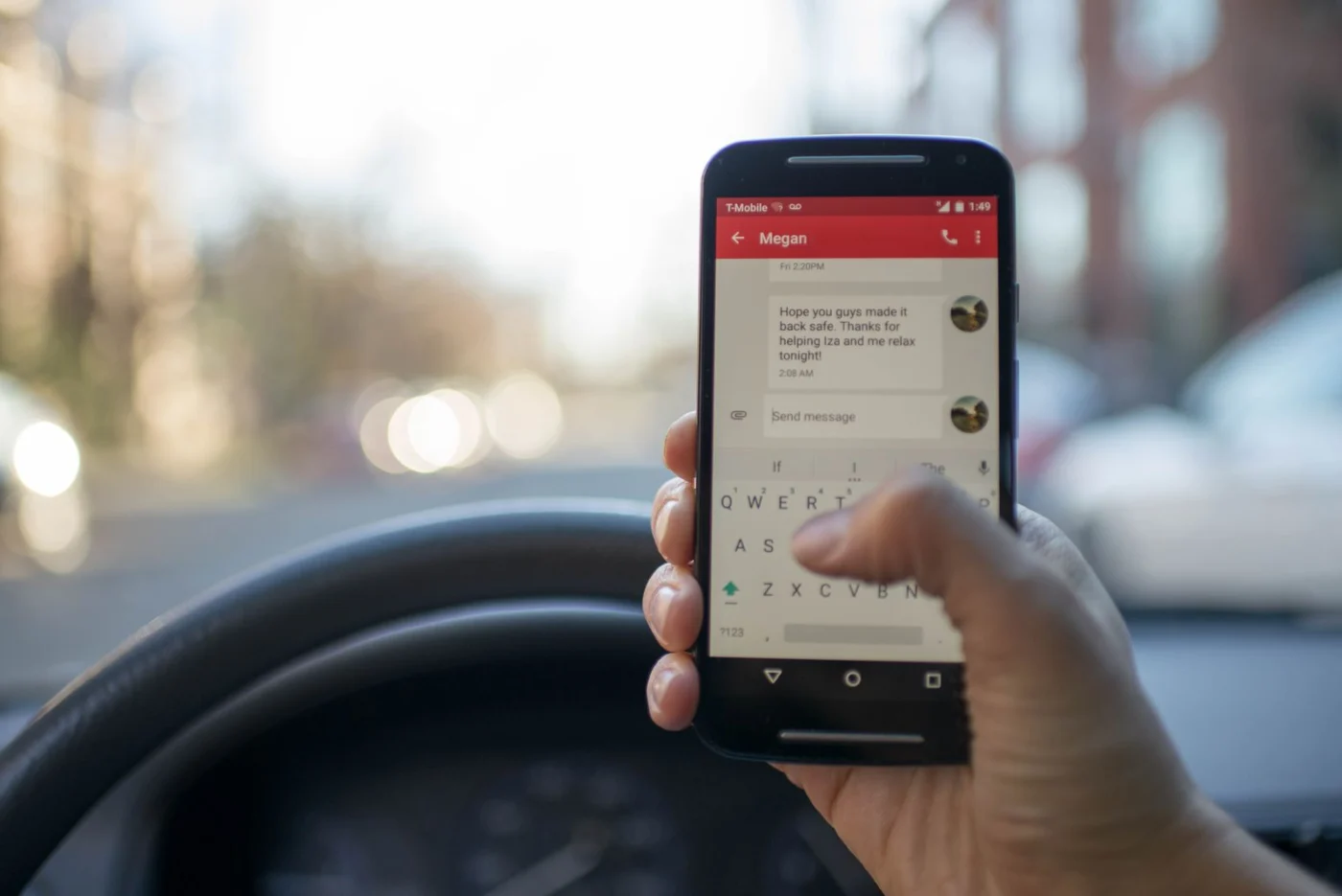
A driver who looks at their phone for a few seconds can cause a crash that changes your life. Distracted driving is negligence, and the driver who caused the crash may be responsible for the harm. Once you hire us, we can investigate what the driver was doing, help preserve the evidence before it is lost and pursue the compensation you may be entitled to. The consultation is free and confidential.
- Contact Us
- Online contact form
- No upfront payments
Every case is different and no result can be guaranteed. The consultation is free. Your contract will explain the fees in writing and whether you could owe case costs.
How distracted driving claims work
A distracted driving claim is a car accident claim with one added element: showing that the driver who hit you was not paying attention. Distraction is negligence. A driver who chooses to look at a screen, eat or turn toward the back seat has stopped watching the road, and the law can hold them responsible for the resulting harm.
The challenge is that distracted drivers almost never admit it. They say you braked suddenly, that the light was yellow or that you were both at fault. Without evidence of the distraction, the claim can turn into an argument over shared fault.
Common problems in these cases include phone records that are never requested, camera footage that is erased within days and injuries that are downplayed because the crash was treated as a simple rear-end collision.
Your rights
After a crash with a distracted driver, two things help protect your claim: prompt medical care and preserved evidence. The police report, photos of the scene, witness names and your medical records can help document what happened and how serious your injuries are. Tell the officer what you saw the other driver doing and get medical care as soon as possible.
The other driver’s insurance company will likely contact you soon. The adjuster works for the insurer and reviews the claim from the company’s point of view; they may ask you for a recorded statement, which could become part of the file, or make you an offer before your injuries are known. Generally, you are not required to give a statement to the other party’s insurance company, and it is best not to sign anything without advice.
Early legal guidance is especially useful in these cases, because proof of distraction is lost over time. Phone records are requested through the legal process, traffic and business camera footage is often kept for only a few days, and witnesses lose touch. Acting early can help preserve that evidence.
Immediate steps
- Call 911 if anyone is hurt or there is immediate danger. If it is safe, move to a safer place nearby without leaving the scene. Tell the officer if you saw the other driver looking at their phone, eating or turned toward a passenger, so it goes in the report.
- Get medical care soon, even if you feel fine. Adrenaline can hide injuries, and medical records can help document them.
- Take photos of the scene, both vehicles, the road, the traffic signals and the other driver’s phone if it is visible inside the car.
- Exchange information and write down the names and phone numbers of witnesses. Other drivers and pedestrians sometimes saw the phone before you did.
- Think carefully before giving a recorded statement to the other driver’s insurance company, and do not post about the crash on social media.
Mistakes that can hurt your claim
- Thinking distraction cannot be proven without a confession
- Waiting days to see a doctor
- Accepting the first offer before your injuries are known
- Giving a recorded statement to the other insurance company without advice
- Posting about the accident on social media
- Waiting too long to talk with a lawyer while records and videos still exist
Common cases we handle
Rear-end crashes at lights and in traffic. A driver looking at their phone does not see stopped traffic and hits you hard.
Uncontrolled lane changes. A distracted driver drifts into your lane or sideswipes you while merging.
Intersection crashes. A driver runs a stop sign or a red light because they were looking at a screen.
Pedestrians and cyclists hit. A distracted driver does not see a person in the crosswalk or the bike lane. See our pedestrian and bicycle accident pages.
Commercial and Uber or Lyft drivers. A driver on the job checks an app, a route or a dispatch message and causes a crash.
How a distracted driving claim moves forward
Investigation. We review the police or CHP report, the crash scene and the vehicles, and identify the sources of evidence that can show what the other driver was doing: phone records, app activity, camera footage, dashcams, witnesses and vehicle data.
Evidence. We send preservation letters so records and videos are not destroyed, request phone and app records through the appropriate legal process and gather your medical records and proof of lost wages to document the impact of the crash.
Communication with the insurance company. Once you hire us, we can communicate with the insurance companies on your behalf, present the evidence of distraction and your damages in a formal demand letter, and respond to shared-fault arguments.
Resolution. Many claims are resolved through negotiation. If no agreement is reached, we can talk with you about taking the case to court. No outcome is guaranteed. Related pages: Car accident lawyer, Uninsured driver accidents and Catastrophic injuries.
- California
- Monday to Friday, 8 a.m.–5 p.m.
- mike@tudefensaaccidentes.com
Personal injury lawyers
Request a Case Review
Tell us what happened. We review your situation and explain your options, at no cost and with no obligation.
Common types of driver distraction
Anything that takes a driver’s eyes, hands or attention off the road is a distraction. These are some of the most common.
Texting and phone use
Reading or sending texts, checking social media, taking calls and using apps while the vehicle is moving.
GPS and in-car screens
Programming the GPS, changing the music or adjusting the touchscreen at high speed.
Eating and drinking
Handling food, coffee and wrappers instead of the steering wheel while driving.
Passengers and children
Turning to talk, reaching into the back seat or tending to children while driving.
Rideshare and delivery apps
Drivers accepting rides or orders on a mounted or handheld phone in the middle of traffic.
Mental distraction
Fatigue, stress or wandering thoughts that keep a driver from reacting to a stopped car or a pedestrian.
Common injuries in distracted driving crashes
A distracted driver often does not brake before impact, which can make the crash harder than one at the same speed where the driver did react.
Injuries in distracted driving cases
- Whiplash and other neck and back injuries
- Concussions and traumatic brain injuries
- Herniated discs and spinal injuries
- Fractures and joint injuries
- Cuts, bruises and airbag injuries
- Internal and chest injuries from the seat belt
- Emotional trauma and anxiety about driving
Take care of your injury and keep the evidence
- See a doctor soon and follow your treatment; the records can help document the injury and its cause.
- Write down what you saw the other driver doing while you still remember it clearly.
- Keep every bill, receipt and proof of missed work.
- Talk with a lawyer soon. Records and videos only exist for a limited time.
How we can help
In these cases, evidence is lost over time. Once you hire us, we can act quickly to preserve it and build the claim around it.
We investigate your case
We get the police report, request the other driver's phone records through the appropriate legal means, look for traffic and dashcam footage before it is erased and talk with witnesses while they still remember.
We communicate with the insurer
Once you hire us, we can communicate with the insurance companies on your behalf and present the evidence of distraction so the crash is not treated as a simple fender bender with shared fault.
We seek fair compensation
We document the cost of your injuries, including future care and lost income, and negotiate a settlement. If no agreement is reached, we can talk with you about taking the case to court.
How the insurance process works
The adjuster who calls you after the accident works for the insurance company and reviews the claim from the company’s point of view. Understanding the process helps you make informed decisions.
Recorded statements
What you say may be written down or recorded and become part of the claim file. Follow what your own policy requires, and consider talking with a lawyer before giving a recorded or detailed statement to the other party's insurer.
Early offers
An early offer may come before the full extent of your injuries is known. Once you accept and sign a release, you usually cannot ask for more, even if your injuries turn out to be more serious than expected.
Preserving evidence
Reports, photos, videos and what witnesses remember can be lost over time. Preserving them early helps show who was at fault.
The value of the claim
No one can promise you an amount before knowing your case. The value depends on how serious your injuries are, your current and future medical expenses, lost wages, the evidence and the available insurance.
How we can help
- Once you hire us, we can communicate with the insurance company on your behalf
- We help you document your injuries, treatment and losses
- We ask that evidence be preserved before it is lost
- We review every offer with you and negotiate based on the evidence
- If a fair settlement is not reached, we can talk with you about filing a lawsuit
Already spoke with the adjuster? In many cases you can still consult a lawyer and move forward.
The claim process, step by step
It all starts with a free consultation. After that, our team works with you through the investigation, communication with the insurance company and the resolution of your claim.
Free consultation
Tell us what happened, at no cost and with no obligation. We review the facts, your injuries and any evidence you already have, and explain your options.
Investigation
We investigate what happened and gather evidence, reports and witness statements. We also review your medical information to better understand your losses.
Negotiation with the insurer
We present a formal claim with the evidence of liability and your damages, and we negotiate with the insurance company on your behalf.
Resolution
Many cases are resolved through negotiation. If a fair settlement is not reached, we can talk with you about taking the case to court.
A legal team that puts your case first
Good representation starts with clear communication and attention to what you need. We aim to keep you informed at every stage, in plain language, and to explain your options so you can make your own decisions.
Legal guidance
We explain how an injury claim is investigated, valued and negotiated, and what each step means for you.
Personal attention
Every case is a person and a story. We tell you who your contact on the team is and what comes next in your case.
Clear communication
Plain answers and updates throughout your claim, from the first contact to the end.
You come first
Clear answers, regular updates and respectful treatment. You are a person, not a number.
Compensation you may be able to claim
A distracted driving claim seeks to cover what the crash has cost you and what it will cost you in the future. These are the categories it may include.
Economic losses
- Emergency care, hospital bills and follow-up treatment
- Physical therapy, medication and medical equipment
- Future medical care when the injury is long-lasting
- Lost wages while you recover
- Reduced ability to earn money in the future
- Vehicle repair or replacement and other property damage
Non-economic losses
- Physical pain and suffering
- Emotional distress
- Loss of enjoyment of daily activities
- Loss of companionship for a spouse or family, when it applies
- No lawyer can promise a result. Every case depends on its facts, its evidence and the available insurance.
Find out if you have a case
Tell us briefly what happened. A member of our team will review your situation, explain your options clearly and answer your questions, with no obligation. Before you sign, your contract will explain the fees in writing and whether you could owe case costs.
- Free consultation, no obligation
- Confidential case review
- Your legal options, clearly explained
- No upfront payments
Send us your information through the contact form.
Request a Case Review
It takes about a minute. Your information is confidential and there is no obligation.
Notice: By submitting this form, I agree to the Terms of Use and the Privacy Policy. Submitting this form does not create an attorney-client relationship and does not by itself mean the firm has agreed to represent you. Please do not send detailed or confidential information about your case until our team contacts you.
Questions about distracted driving accidents
Clear answers to the most common questions from people hit by distracted drivers.
Is it illegal to use a phone while driving in California?
California generally restricts handheld phone use while driving. A violation can serve as evidence of negligence, but a ticket is not needed to file a claim. What matters is showing that the driver was not paying attention when the crash happened. We can explain how the rules apply to your situation.
How do I prove the other driver was distracted?
With phone records obtained through the legal process, witness statements, traffic and business camera footage, dashcams, the police or CHP report and vehicle data showing whether the driver braked. What the driver admitted at the scene and their social media activity at the time of the crash can also help. Once you hire us, we can start gathering this evidence.
What if I was partly at fault?
California generally follows the comparative fault rule: if you were partly at fault, your compensation may be reduced by your percentage, but that does not always prevent a claim. Insurance companies sometimes argue shared fault. Talk with a lawyer before giving a statement about how the accident happened.
What compensation could I receive?
Depending on the facts, a claim may include medical expenses, future care, lost income, reduced earning capacity, vehicle damage and pain and suffering. No amount can be promised; it depends on the evidence and the insurance available.
How long do I have to file a claim?
Many injury lawsuits in California generally have a two-year deadline, with exceptions. If a California public entity may be responsible, a claim generally must be filed with the agency within six months, and if the agency rejects it, a separate deadline to sue may apply. Evidence is also lost quickly. Contact us as soon as possible.
What if the distracted driver was working, such as making deliveries or driving for Uber?
The employer or the company’s policy may share responsibility. Our pages on Uber and Lyft accidents and commercial vehicles explain how those claims differ.
How much does a distracted driving accident lawyer cost?
The initial consultation is free. Many of these cases are handled on a contingency fee, which means no upfront payments. Your contract will explain in writing the percentage and whether you could owe case costs, even if no money is recovered.
Hit by a distracted driver?
Request a case review.
Over time, evidence can be lost and claims have deadlines. Tell us what happened and learn your options. The consultation is free, confidential and without obligation.